Jan Švec | honzas.cz Česky
Menu

Teaching in the age of AI: what works and where the limits are

September 1, 2025

Generative AI can turn a lecture into additional learning support, help students practise and give teachers another perspective on their own materials. At AI Monday Pilsen #7 on 1 September 2025, I presented my workflow from a recording and UWebASR transcript to a chronological summary, topics discussed beyond the slides, a glossary and an experimental Custom GPT. The talk also covered practical limitations: input quality, human review, privacy protection and limited feedback about how students use the chatbot.

Portrait preview of the title slide for a presentation about AI in university teaching

Detection of Cognitive Disorders Using ASR-Based Nonsense Words Repetition

August 22, 2025

Short speech tasks can reveal cognitive changes without requiring a long clinical interview. This paper examines whether automatic speech recognition can evaluate immediate repetition of nonsense words and distinguish healthy participants from people with cognitive impairment. The experiment shows why recognition errors, phonological similarity and the choice of language model all matter when speech technology becomes part of a screening method.

Portrait preview of the nonsense-word repetition paper

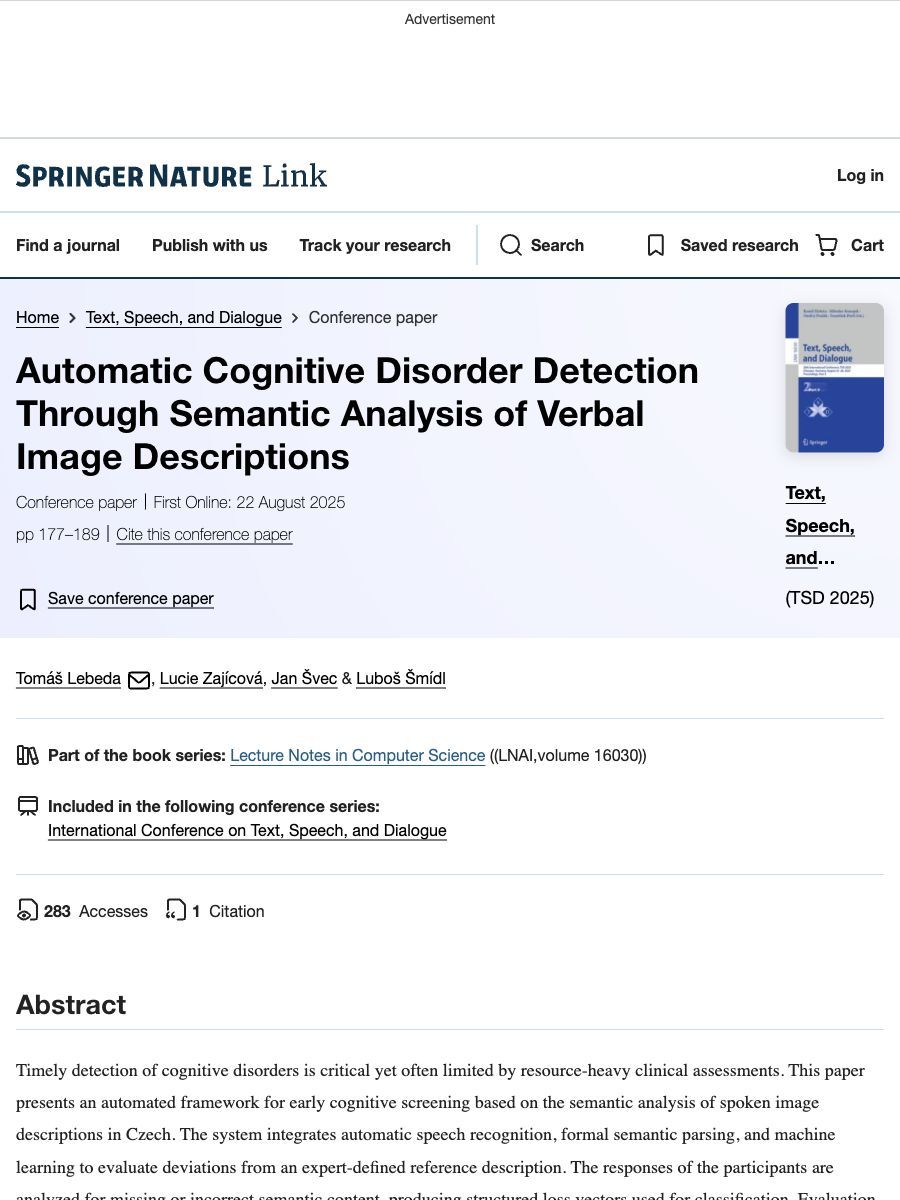
Automatic Cognitive Disorder Detection through Semantic Analysis of Verbal Image Descriptions

August 22, 2025

A spoken image description contains information about more than pronunciation: it also shows which concepts and relations a person notices and how they organise them in language. This paper combines speech recognition, formal semantic analysis and machine learning to compare Czech descriptions with an expert reference. The resulting semantic features offer an interpretable route towards scalable screening for cognitive disorders.

Portrait preview of the semantic image-description paper

When speech recognition leaves the lab: UWebASR in practice

July 25, 2025

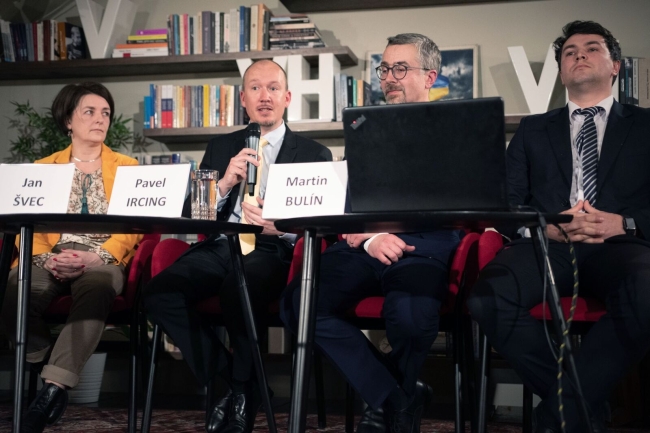
On 25 July 2025, CLARIN published the impact story Innovative Tool Transforms the Use of Voice Technology. The article describes how UWebASR and related speech and NLP tools from the Czech CLARIN node support media, hackathons, security-oriented processing and academic use. For me, the important point is practical: speech-recognition infrastructure becomes useful when people can rely on it outside a lab demo.

Wide preview with Martin Bulín, Pavel Ircing and Jan Švec from the CLARIN impact story about UWebASR

Asking Questions: finding answers in long oral-history recordings

July 13, 2023

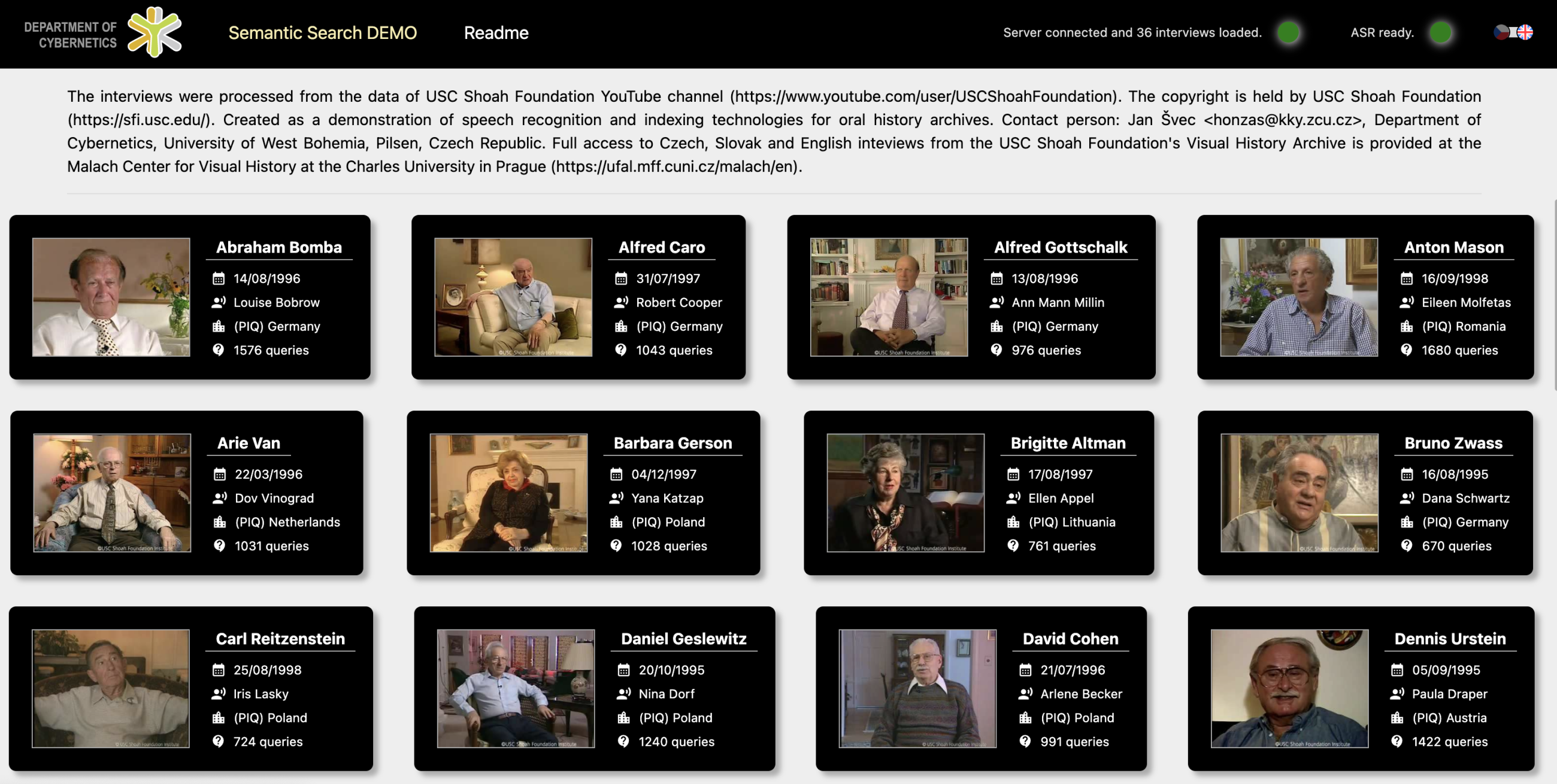
Long oral-history recordings are rich historical sources, but their length and structure make them difficult to search and reuse. On 13 July 2023, CLARIN published the impact story State-of-the-Art Speech Recognition for Understanding Oral Histories, presenting the Semantic Search / Asking Questions framework developed around speech recognition, generated questions and semantic search. The practical goal is to help researchers and visitors ask a question, find the relevant passage and play the answer directly from the original testimony.

Wide preview of the Semantic Search / Asking Questions interface used in the CLARIN impact story

Google Sheets: A Poor Man's Database

January 4, 2018

Collecting measured values is often the easier half of the task. Processing, storing, and displaying them reasonably is harder. This archived note shows how Google Sheets, Google Forms, and a little Python can work as a simple time-series database.

Google Sheets: A Poor Man's Database

A Smartly Built Dumb House

November 15, 2017

This archived article opens a mini-series on building a smart home without expensive smart wiring, central control systems, or cloud-connected devices. I describe why I preferred a decentralised 'dumb house with smart functions' and outline the subsystems used in my own installation.

Plzen Barcamp: Third Time's the Charm

April 17, 2016

On Saturday 16 April 2016, the third Plzen Barcamp took place. I was glad to attend again, meet familiar and new faces, enjoy the day, and finally make time for the afterparty.

MLMU: How I Competed on Kaggle.com

October 22, 2015

On 21 October 2015, I spoke at Paralelni Polis about competing on Kaggle.com in the Greek Media Monitoring Multilabel Classification (WISE 2014) competition. The archived note links to my Prezi slides from the Machine Learning Meetup in Prague, a related older post, and the YouTube recording.

LVM: A Little Christmas Magic for Admins

December 22, 2014

Every Linux admin knows LVM, the Logical Volume Manager. This archived note summarises two advanced topics I had recently used: cloning logical volumes and caching a logical volume on an SSD.

Python: Iterative XML Parsing

November 3, 2014

This short article extends the previous post on parsing Wikipedia XML dumps. It shows a small piece of code for iterative XML loading with ElementTree, which is now part of the Python standard library.