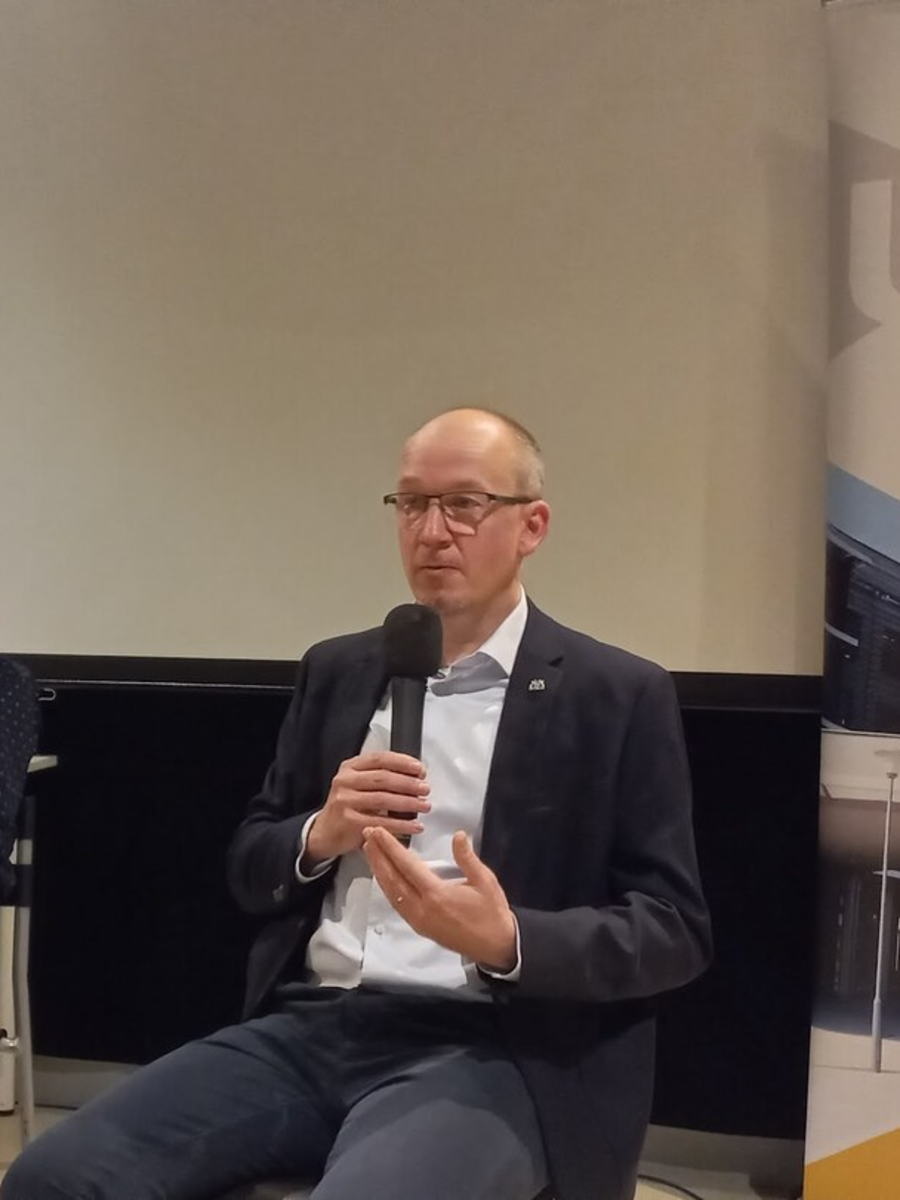
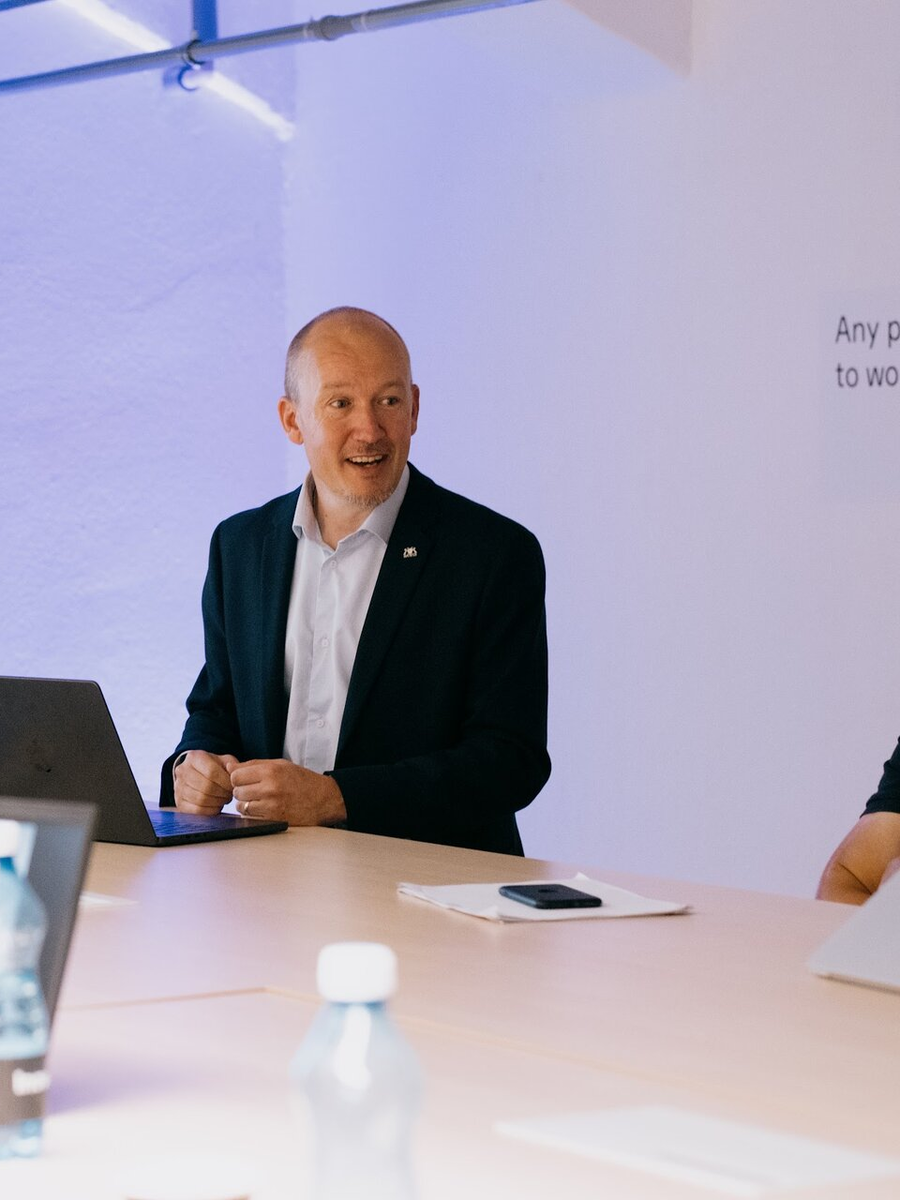
Jan Švec | honzas.cz
Menu

# Applied AI

13 items

All tags

From UWebASR to calibrated accuracy estimates for oral histories

July 3, 2026

Automatic speech recognition is most useful when users can also estimate how much trust to place in its output. For long witness testimonies, including Holocaust survivor testimonies, this matters because researchers often work with sensitive, historically valuable material. Agentic AI helped us turn a proof-of-concept workflow into a deployable production feature in roughly two weeks.
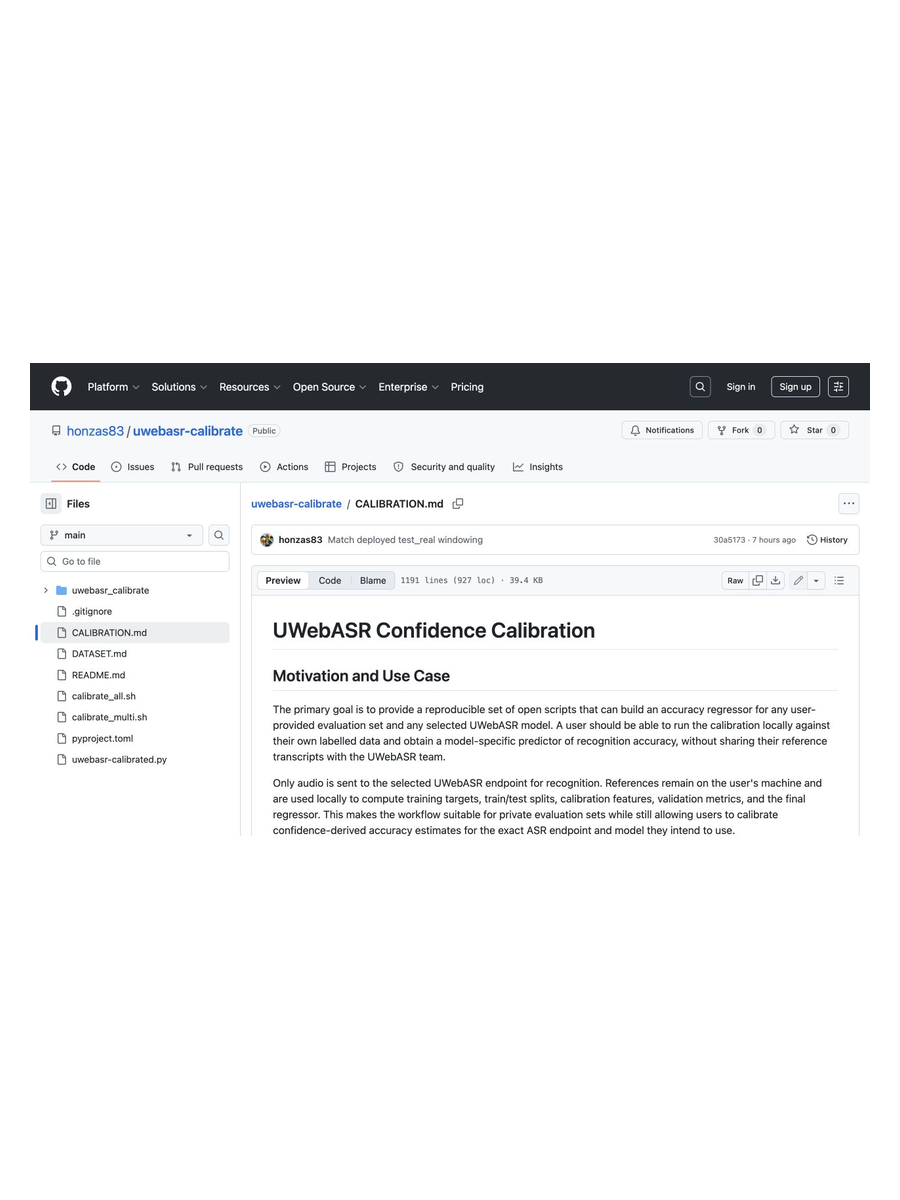
Portrait preview of the GitHub repository with the UWebASR confidence calibration method

Do not buy AI, download it. But clean up your data first.

June 10, 2026

Open models have made artificial intelligence more accessible, but useful deployment still depends on data, integration and honest evaluation. It was a pleasure to bring this practical perspective to the general public at Inovujeme Plzeň 2026 Next Level and to appear alongside such a strong group of speakers. I thank SIT Port for the organisation and for creating a lively workshop setting at TechTower.

Jan Švec speaking to workshop participants at TechTower

AI in education, companies and biotechnology

27-28 April 2026

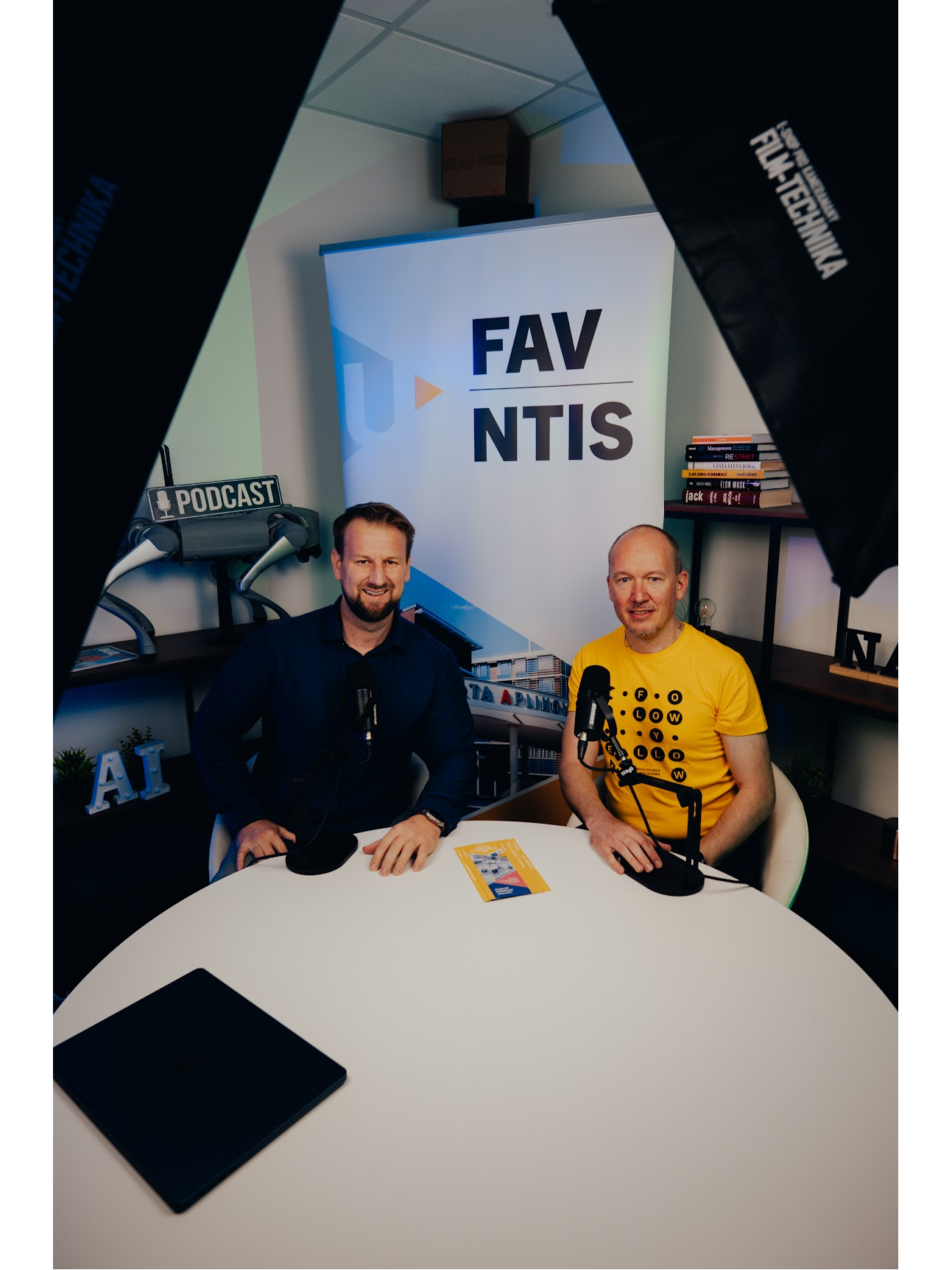
Artificial intelligence is moving into education, engineering and biotechnology, but each field asks different questions about usefulness and responsibility. In the Naučíme AI podcast, I discussed how people can work with AI without reducing the subject to a single chatbot. The conversation connects university teaching, company adoption and interdisciplinary research through practical examples.

Portrait photograph of Jan Švec and Jakub Baxa recording the Naučíme AI podcast

Agentic AI for Digital Humanities

26 April - 12 May 2026

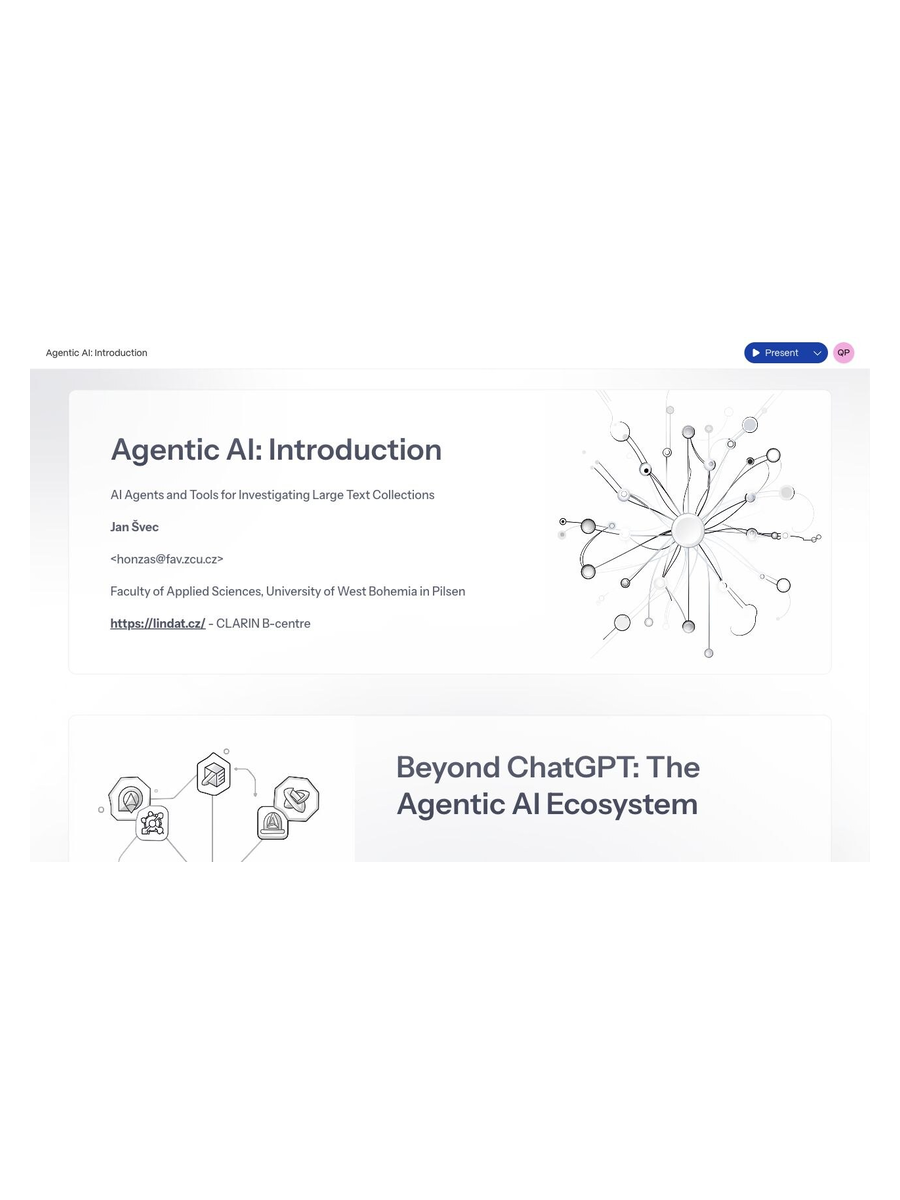
Complex research tasks do not fit into a single prompt: they need tools, intermediate checks and an inspectable sequence of steps. These workshop materials introduce agentic AI as a workflow for digital humanities and archival research. They connect an Oxford research stay, CLARIN collaboration and practical work with NATO archival documents.

Portrait preview of the Agentic AI Introduction slides

SpecKit: structured AI-assisted software development

January 28, 2026

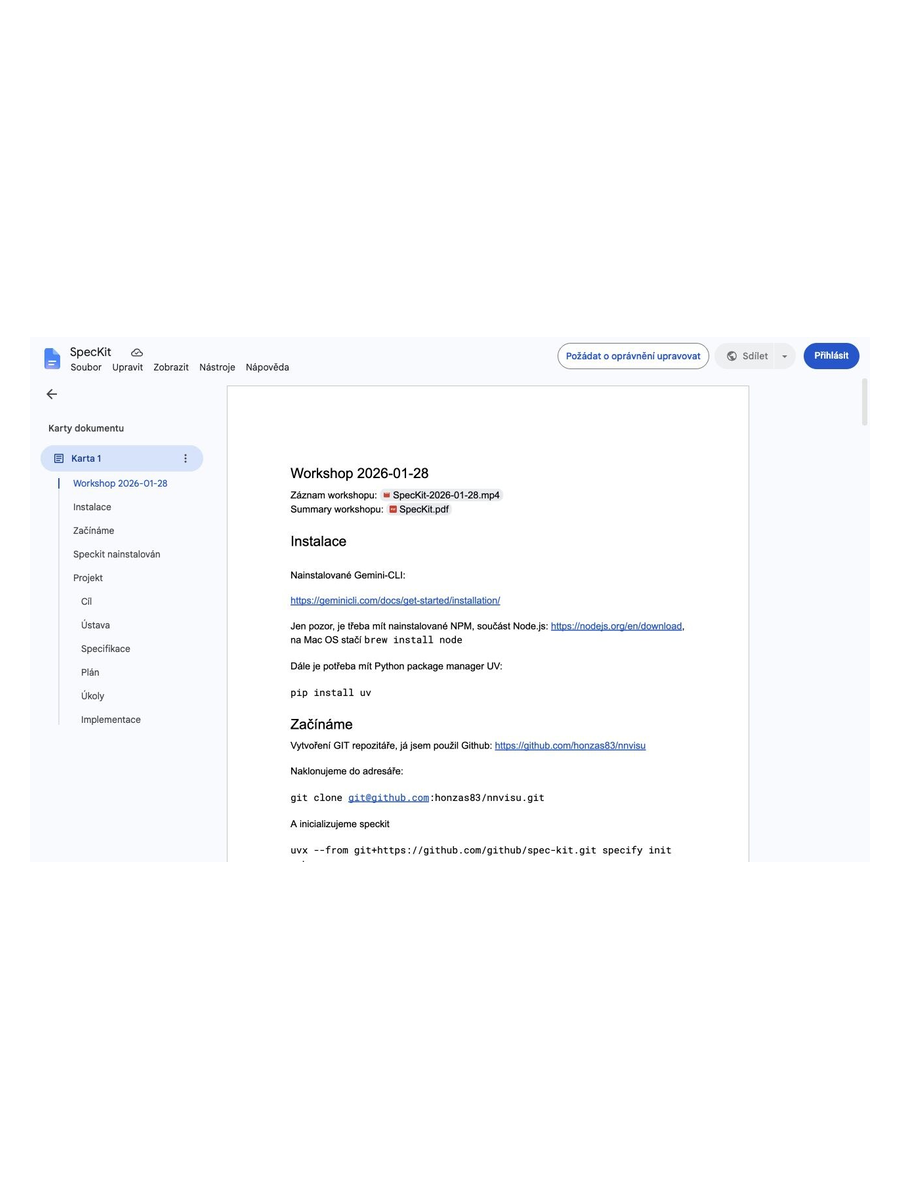
AI coding assistants can produce code quickly, but speed does not replace clear requirements and architecture. SpecKit turns an initial idea into a specification, an implementation plan and a visible set of tasks. The workshop shows how this structure helps keep research prototypes and applied software understandable while they evolve.

Portrait preview of the SpecKit workshop material

Mentoring at the 10th AimtecHackathon

2026

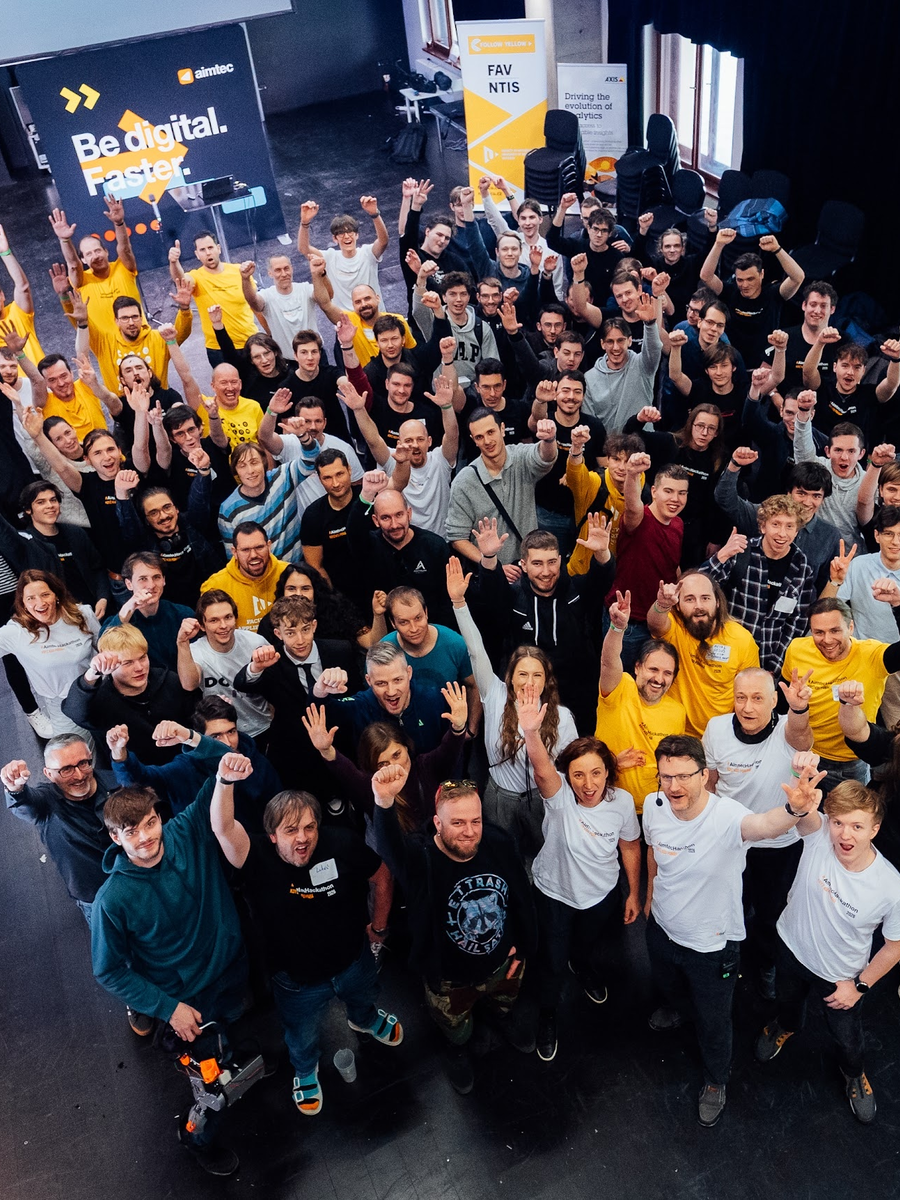
Hackathons give teams a concentrated space to turn ideas into working prototypes with support from experienced mentors. At the 10th AimtecHackathon in 2026, I again mentored teams working with AI, LLMs, local models, speech recognition and synthesis, language technologies, and Python. The weekend also highlighted the sustained work of Petra Šteklová, Jiří Dobrý, and the Aimtec team in supporting Plzeň's hacker community.

Portrait photograph from AimtecHackathon 2026 showing teams at work as the hackathon timer reaches zero

The Czech Republic in the Age of AI: Should We Be Afraid?

December 3, 2025

Public discussion about AI helps separate practical changes from predictions and gives education, work and responsibility a shared frame. On 3 December 2025, I joined the Debate with Respekt at Moving Station in Pilsen with Marek Ruttner and Dominika Perlínová. The later Respekt podcast preserves the conversation about large language models, changes in human activity and possible directions of AI development.

FAV NTIS logo extracted from the event photograph

When speech recognition leaves the lab: UWebASR in practice

July 25, 2025

On 25 July 2025, CLARIN published the impact story Innovative Tool Transforms the Use of Voice Technology. The article describes how UWebASR and related speech and NLP tools from the Czech CLARIN node support media, hackathons, security-oriented processing and academic use. For me, the important point is practical: speech-recognition infrastructure becomes useful when people can rely on it outside a lab demo.

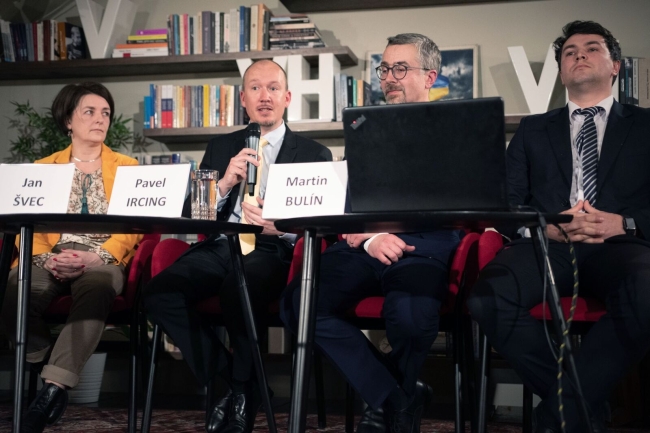
Wide preview with Martin Bulín, Pavel Ircing and Jan Švec from the CLARIN impact story about UWebASR

MLMU: How I Competed on Kaggle.com

October 22, 2015

On 21 October 2015, I spoke at Paralelni Polis about competing on Kaggle.com in the Greek Media Monitoring Multilabel Classification (WISE 2014) competition. The archived note links to my Prezi slides from the Machine Learning Meetup in Prague, a related older post, and the YouTube recording.

On the Winners' Podium in Artificial Intelligence

July 25, 2014

In June and July 2014, I used the methods I had worked with in my dissertation in a Kaggle competition on multi-label classification of Greek media articles. The competition ran from 2 June to 15 July 2014 and ended with my model in third place out of 121 teams.